
Your excellencies, friends, fellow workers in the field of justice and peace, it is indeed an honor to be able to share a few thoughts and pose a few questions on this topic that I believe you are best able to address.
I first met Pilar Lara over five years ago in Washington when I worked in the State Department's Bureau of International Organization Affairs, primarily on all matters before the United Nations. I'd asked a number of my colleagues who worked on development and human rights in the Middle East to meet with Pilar concerning the projects run by her organization, the Foundation for the Social Promotion of Culture, in the region. We all were inspired by her achievements and her deep commitment to helping people in very difficult situations.
I was excited to later find out that the Foundation also started a research center. Too often, governments appear to do only what is needed to sustain the status quo. They seem unable or unwilling to invest the time to develop policies that could bring more just and lasting results. That changes when officials have better information and options, and that is where research centers like the Foundation's Center for Middle Eastern Studies play a role. They are vital conduits linking dedicated policymakers with good ideas.
Providing timely information to U.S. policymakers is the primary reason The Heritage Foundation was created 36 years ago. Today, it continues that mission, and it is backed by 450,000 members who support its vision of helping to build a world where freedom, opportunity, prosperity, and civil society flourish.
Not everyone believes this is possible. In America, some people say, for example, that Islam and liberty are not compatible--the radicalization and politicization of the religion of Islam leaves little room for Muslims, Christians, and Jews to live together peacefully. Frankly, we do not accept that. The desire for freedom does not know race, religion, gender, age, or culture.
Dr. Kim Holmes, the former Assistant Secretary of State for whom I worked who is a Vice President at Heritage, decided to tackle this issue in a project titled "Islam ... Liberty." Through discussions with Muslim and non-Muslim leaders and experts, we are examining challenges that Muslim-majority societies face in securing human rights and fundamental freedoms. Another project on "Religion, Family ... Civil Society" looks at ways to strengthen the important institutions on which successful democracies depend.
Tragically, though many foreign policy issues move quickly, peace in the Middle East does not. I wanted to participate in this conference to listen and learn about why this is so from those who are working to bring a future of peace to the region. The timeliness of this conference escapes no one, coming so soon after Pope Benedict's historic trip to the Holy Land and President Barack Obama's speech in Egypt. Many were listening, hoping that the attention they brought to a situation that seems to be at an impasse would provide new openings for a solution. Very many people believe that unless something changes soon, the opportunity for any solution--including the two-state solution--will be lost, and graver things will follow.
As our afternoon discussion demonstrated, the reasons for this concern are many. There are escalating hostilities between Israel and the Palestinians, and between Fatah and Hamas. There are questions about the new Israeli government's positions, what it will do about the settlements and its fears over Iran's nuclear weapons aims. There are concerns over increasing human rights abuses in the region, a continuing lack of economic opportunities that makes youth easy prey for radicals, and the deteriorating situation for Christians and other religious minorities.
But what timeline for forcing change would be wise? Iraqi Prime Minister Nouri al-Maliki has said that "[t]here are two mentalities in this region, conspiracy or mistrust." Nothing will change if attitudes do not change. I believe that is why so many people listened closely to President Obama's remarks and to Pope Benedict's before him. Time will tell whether the seeds these two very different leaders planted will blossom or will have fallen on rocky soil.
Many people welcomed President Obama's remarks to the "Muslim world" as evidence that the United States will engage directly in the Middle East and no longer play the role of "silent partner." Now, the President said many things that needed to be said, and all Americans want their President to succeed on the international stage. But we are practical people. We have a healthy disdain for political promises until we see results. The President's words were well received, but we are watching to see what he follows them with. Unfortunately, what I see so far is disconcerting. He has cut funding for democracy promotion in Egypt significantly, for example, and reportedly agreed to let the Egyptian government approve which NGOs get U.S. funding from now on. What do such political decisions say to people there hoping and working for more freedom?
It seems to me now that the Pope chose the better balance in his remarks. He did not emphasize one side over the others. He showed deep understanding and respect for all those who live there, and he gave voice to everyone's deepest concerns. He pressed for solutions based on human dignity that tear down the physical and emotional walls keeping people apart and that will strengthen religious freedom. He seemed a welcome breath of cool air in a hot desert; and his words primed the soil for President Obama's speech by focusing attention not just on the here and now, but on the future.
And so, it is timely that we ask here, "What future for the Middle East?" Is it apocalyptic, as some say--a "ground zero" in a clash of civilizations between pre- and post-modernity, East and West, secularism and religion, globalism and sovereignty? Such topics stimulate lively debates but do little to lead to practical solutions for a region where struggles over land and power have caused carnage across time and left historical memories that I, as an American, cannot fully appreciate. I do understand one thing, however: Unless there is the will to make all sides equal partners in the outcome, resentment will fester and return more virulent. Is there the will to do this?
Everyone longs for a Middle East where peace and justice prevail. As the conference paper and speakers today have noted, the continuing fragmentation of ethnic and religious groups seriously complicates the search for peace. Palestinians in Gaza are suffering more since Hamas took over and hostilities with Fatah and Israel increased. Poverty, unemployment, neighborhoods destroyed, families separated by checkpoints--one wonders how people can bear it. Israelis, whose heritage is a long experience with persecution (even in Spain), live in existential fear of attacks from ever more modern weapons. The wall is a constant reminder of pain for both sides. Christians are leaving in droves, and governments around the region are clamping down on human rights.
By focusing on this fragmentation, however, are we limiting our ability to find solutions? Is the problem that there are disparate groups that like shards of a broken glass seem to have little chance of being put back together? Or could they one day come together like a mosaic--a vibrant portrait of human diversity made up of brightly colored pieces of different sizes and identities?
I prefer the latter vision, which has been reinforced by my visit to Spain. As I toured Madrid and beyond yesterday, I glimpsed its rich multicultural heritage. For a time, Spain was one of the few places in the region where Muslims, Christians, and Jews could live together in relative peace. It did not last, of course; religious extremism, plagues, wars, and even dictatorship have had their ways here. But just 40 years ago, could any of us have predicted that Spain would change governments and transform itself so quickly into this vibrant democracy?
Keeping mosaics together requires vigilance, and freedom must never be taken for granted. The Spanish people have much to offer people in state-controlled societies about this, about the real stepping stones to freedom given the right influences and the right influencers. What are those influences, and who are those influencers in the Middle East? Are there other mosaic "success" stories in the region that could shed some insight? Perhaps if we can identify them, we can develop a strategy to help them.
Consider, for example, Indonesia--the world's largest Muslim-majority democracy. Almost 90 percent of its 240 million people are Muslim--as many as there are in the entire Middle East. In just one decade, what began as a student-led reform movement transformed Indonesia from an authoritarian state into a pluralistic democracy. People set aside their religious and ethnic differences to work together for freedom. They will soon get to vote again, and polls are showing that support for the Islamist parties linked to the Muslim Brotherhood has fallen by 10 percent. More and more Indonesians oppose the Islamists' increasing intolerance and violence against religious minorities and find their government's blind eye toward it despicable.[1]
Lebanon also has a History of religious pluralism, with Muslims and Maronite Christians sharing power and tolerance of Greek Orthodox, Baptists, Coptic/Assyrians, and Druze. Though extremists hope to push back Lebanon's political and civil advances, this election showed that people who have tasted freedom will not give it up lightly.
Kuwait is another example. For the first time, women have just been elected to parliament, only four years since women first gained the right to vote. According to journalist Amir Taheri, Islamists lost seats to secular candidates, and their share of the vote dropped significantly since the last general election. The Muslim Brotherhood lost three of its four seats. Shiites, with 25 percent of the population, gained seats, and voter participation increased overall.
These are a few examples, yet they show that the future of Middle East societies rests a great deal in the hands of people. The influencers for change are religious leaders, students, human rights activists, women, journalists, and diplomats who have all said "enough" to violence. They brave physical harm, jail, and humiliation to fight for human dignity, freedom of conscience and religion, economic opportunity, and political and civil rights--ingredients of the glue that holds social mosaics together.
His Beatitude Patriarch Sabbah has spoken often about the responsibilities that religious leaders of all faiths have to cooperate to bring peace and religious liberty to the region, to "denounce violence as contrary to religious tenets," and to "confirm others in the ways of justice, of what is right, and of forgiveness." We may ask heads of state to say the same things, but it would not carry the same moral weight as religious leaders. Who are the other religious leaders who would speak these truths? They need support.
People of faith are also influencers. I often have heard that Christians have been a welcome buffer zone in the Holy Land, how Christmas services in Jerusalem were commonly attended by people of different faiths until recently. Archbishop Jean Benjamin Sleiman of Baghdad shared with me how, in Iraq, Christians have had a small presence but a huge impact, and now even Muslims express alarm over the rate at which they are leaving. What does that portend for the future of these societies?
Influencers are also civil society actors, "good Samaritans" like the Foundation for the Social Promotion of Culture. Government alone cannot provide for every human need. Bureaucracies are too impersonal and almost always settle for the lowest common denominator. The work of the Foundation in the region demonstrates how much more effective civil society can be in improving the well-being and future of communities.
It is no surprise that Pope Benedict pointed this out twice after visiting one of the Foundation's projects in Jordan that serves over 900 disabled people of all backgrounds. He mentioned the Our Lady of Peace Center in his remarks at the Mosque al-Hussein bin Talal in Amman and in his first general audience back in Rome.
Of course, there are influencers in the region who are not helpful, and that is where political leaders must focus their attention. Iran is the most troubling, giving its "unequivocal" support to Hamas and Hezbollah, but also supporting the Palestinian Islamic Jihad and Iraqi Shia militias. Muslims have suffered most from their violent acts. Kuwait recently accused Iran of inciting its Shiite community, but Tehran has long been a destabilizing force in the region--trying as it has to overthrow governments in Iraq, Bahrain, Saudi Arabia, Egypt, and Lebanon. The Ayatollah Khamenei calls the Holocaust a "big lie" and criticizes any Palestinian who seeks a negotiated settlement with Israel. Such words do not foster peace.
Who can influence Iran? It is not likely the United States, though supporting the people in their efforts to gain democracy and freedom is vital. The problem is that Tehran has repeatedly rebuffed President Obama's advances.Perhaps the best influencer is Europe, which has many economic and political relationships with Iran. Germany in particular has thousands of companies operating in Iran. How might Tehran respond if Germany halted its investments and adopted a tougher stand against its human rights abuses and support for terrorism? What if Europe toughened its sanctions to help bring Iran to a more "teachable moment" (as academics like to say) about its nuclear weapons program?
Such measures would help lessen security threats, but alone are not enough. Without solidifying the building blocks of peaceful societies, no political solution will last. As we heard today, in a region where religion is part of the conflict, religious freedom must be part of the solution. I am reminded of the work of Radwan Masmoudi, who heads the Center for the Study of Islam and Democracy. One of many Muslims who believe religious freedom is the foundation of strong moral societies, Masmoudi has pointed out where the Koran teaches that humans are created free and that violating basic freedoms--including the freedom to worship-- contradicts both human nature and the will of God.
There is much to be done by all sides in this area. Israel's Basic Law on Human Dignity and Liberty provides for freedom of worship, yet certain religious minorities are facing increasing discrimination. The Palestinian Basic Law provides for religious freedom, yet Hamas's control in Gaza has made it difficult for the Palestinian Authority to enforce it there. Thus, it has yet to investigate the recent deadly attack on a Christian bookstore owner. In Iran, the parliament is working on codifying severe punishments, including death, for converting from Islam. In Saudi Arabia, converts still face the death penalty and religious minorities, including Shiites who make up 15 percent of the population, are frequently detained and harassed.[2]
It is indicative of this problem that the 2005 Arab Human Development Report talks about seven "nonnegotiable guarantees" that would enable Arab countries to transition to democracy, including the right to vote and the freedom to join associations. But little is said in it about religious freedom, implicitly condoning state intolerance. History, however, is replete with examples of how political freedoms and religious freedoms go hand in hand. Political freedoms provide the conditions, the space, for people to practice their religion without coercion. Freedom of conscience, freedom of association, and free speech are all critical to the practice of religious pluralism.
Other building blocks that can be stepping stones to economic development and peace are necessary as well. These include property rights, education, and women's rights. The 2004 Arab Human Development Report calls discrimination against women one of most significant obstacles to development in the region.
But there is hope. A recent study by the American nonprofit Freedom House cites successful efforts by civil society activists working with governments to increase freedom and equality for women. Last year, the United Arab Emirates appointed its first female judges; and women in Saudi Arabia, where their rights are most severely restricted, can now study law, obtain identification cards, and register a business.
So who are the political leaders, human rights activists, and civil society groups in the region that could press for greater religious pluralism, women's rights, and other freedoms? They deserve our encouragement.
There is much more we could discuss along these lines, but let me conclude with one last observation. If there is one thing I will take back from our discussion about the future of the Middle East thus far, it is hope--because it shows how much people truly care. People who care can transform societies. The question for us is not if there is a future for peace in the region, but rather who are the influencers? Who can best advance the freedoms that unleash the human and social capital that is necessary to make any political solution work? And how can we encourage them?
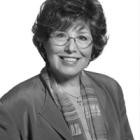
Janice A. Smith is Special Assistant and Policy Coordinator for the Vice President of Foreign and Defense Policy Studies at The Heritage Foundation and its current representative on the U.S.-UNESCO National Commission. She spoke at a conference in Madrid, Spain, sponsored by the Foundation for the Social Promotion of Culture's Center for Middle East Studies. Speaking on her own behalf, Ms. Smith delivered a shortened version of this prepared draft during an evening session of the conference.



