
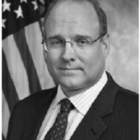
Presented at the Heritage Foundation
by Mr. Marshall Billingslea
Principal Deputy Assistant Secretary of
Defense
Special Operations / Low-Intensity Conflict
April 11, 2003
It's my pleasure to be here to speak to you today. I thank the Heritage Foundation for hosting us today.
I am going to take this opportunity to: (1) update you on the strategy we are implementing in the global war against terrorism; (2) the progress - and setbacks we have had in the war; and (3) to discuss the significant implications that strategy has for the United States Special Operations Command (USSOCOM) and Special Operations Forces (SOF).
The Bottom Line
I will give you the bottom line at the outset. The United States and its allies have made significant progress in destroying and disrupting key parts of the international terrorist network with which we are at war. Al'Qaida is an organization under great stress, with a leadership that seems increasingly less able to plan multiple large scale attacks because they are focused on the more immediate problem of evading coalition capture.
However, I caution that we are certain that we do not know all of the planning that al'Qaida has already done, and we are concerned that they may have set certain operations in motion before the most recent chain of events leading to Khalid Shaikh Muhammad's capture. Moreover, al'Qaida and affiliated terrorist organizations have proven capable of regenerating lost parts, and of changing tactics and techniques to adapt to our offensive efforts.
To put it simply: Al'Qaida and other related terrorist groups today remain intent on conducting devastating attacks against the United States, our friends and allies. At least some of their planning seems to contemplate the use of chemical or biological agents, in addition to their proven practice of using low-tech, conventional explosives to mount attacks with devastating consequences.
The Nature of the Enemy
Now, before I describe the specific progress that has been made to date, I will sketch out the nature of the international terrorist network so that you can better see how we are targeting key strands.
Al'Qaida is perhaps best viewed as part of a spider web. At the center of the web are a number of terrorist groups - dozens actually, of varying sizes with varying agendas. Al'Qaida and its proxy groups, such as the IMU in Uzbekistan, and Jemaah Islamiyah in Indonesia, and Abu Sayyaf in the Philippines, and EIJ in Egypt, Algerian groups such as the Salafist Group for Combat and Prayer, Chechen and other radical groups.
From this core of the network spread tendrils around the globe. They reach deeply into those rogue states that are "state-sponsors of terrorism" (i.e., Iran, Iraq, Libya, Syria, Sudan, Cuba, and North Korea).
The web stretches into the ungoverned and less-governed zones of the earth, the triborder area in Latin America, parts of Yemen and Pakistan and Afghanistan, certain of the islands of the Philippines and Indonesia, parts of Lebanon, Somalia, and other parts of Africa.
The web attaches itself to thousands of points, reaching into foreign educational systems - the madrassas. It is woven throughout religious institutions, and has spread into non-governmental organizations and charities that are used as Trojan Horses to move people and finances around the world. The tendrils creep into certain banks and the hawallah system, and into various media outlets. The tendrils are also interwoven with other transnational "webs." There are linkages to weapons smuggling, and drug running rings, and to proliferation networks.
The web reaches well into friendly nations. Nearly every NATO partner has uncovered one or more al'Qaida cells. In fact, the terrorist network reaches right into our own backyard, into America. Buffalo is but one city that we have discovered to be penetrated by the al'Qaida network.
The spiderweb of loosely-organized terror groups has no single, integrated command structure. While the leadership of some key organizations can be eliminated, those organizations do not necessarily cease functioning.
We have seen cells either continue to operate quasi-independently, or begin to coordinate with other terrorist organizations. In some cases, we have found senior operational coordinators interchangeable with various cells, meaning that they can and do supplant one another in event of capture, and persist in execution of operations. Likewise, these organizations are capable of replacing lost leadership by nominating operatives and elevating them in stature.
Obviously, key arrests have disrupted terrorist attacks. But there is a crucial difference between a suspended terrorist operation, and one that has truly been abandoned. Some of the groups in the international network (and al'Qaida in particular) have proven themselves exceptionally patient and deliberate. We have seen instances where the planning for an attack was temporarily suspended after an arrest or death, only to resume a few months later with new personnel leading the charge.
Bringing to Bear All Elements of National Power
Clearly, when faced with such an adaptive organization, we cannot apply pressure sporadically or unevenly. It has been necessary for us to engage, quite literally, in a "full court press," bringing to bear all elements of our national power. Striking at this network has necessitated an unprecedented level of cooperation among U.S. defense, intelligence, law enforcement, and diplomatic agencies.
The United States Special Operations Command, which was created by Congress in 1987 together with the office that I currently head - the Office of Special Operations and Low Intensity Conflict -- has been a key player in that effort. Both USSOCOM and SO/LIC are working hand-in-glove with other parts of the U.S. government and with coalition partners.
Likewise, we are benefiting from, and part of, an unparalleled level of cooperation on a global scale between the departments and agencies of numerous foreign governments, acting both in concert with the United States, with one another, and on their own.
There is truly a global coalition against terrorism. That coalition has had some successes which I will now describe.
Denial of Sanctuary
The groups that are today conspiring to commit mass murder of American and allied citizens operate overtly out of a handful of terrorist sanctuaries. The United States government is systematically draining those swamps in a denial of sanctuary campaign. Afghanistan was the first such territory, post-September 11, that the United States liberated from the grasp of terrorist organizations. In losing Afghanistan, al'Qaida lost its ability to continue using the enormous, two-decades-old infrastructure of paramilitary training camps scattered throughout the country.
The loss of those camps had an immediate and obvious impact on al'Qaida. Gone were the training facilities, and the chemical and biological research laboratories they had created, along with some of the equipment they had procured. The leadership now is scattered, and trustworthy communications are much harder to have.
But the loss of Afghanistan has had a deeper, intangible effect on terrorist organizations that is hard to describe. There no longer is an equivalent place where aspiring young terrorists can go to bond with one another and demonstrate their commitment to fundamentalist extremism, and to receive a rigorous physical and operational regimen. The psychology of the Afghan terrorist camp network, luckily for us, cannot be easily replicated.
That said, al'Qaida and others are trying. And they are finding sanctuary in other countries. Iraq is one such place. We are now in the process of denying al'Qaida and other terrorist groups sanctuary in that country. And we are cautioning other nations not to allow al'Qaida across their borders, or to operate within their territory.
At a very early phase of the campaign in Iraq, the United States struck multiple terrorist training facilities and encampments in the northeastern part of the country. As Secretary Rumsfeld has noted, those initial air strikes were then followed by operations on the ground, led by Kurdish forces.
The targets are a network of facilities, run by an extremist Kurdish organization called Ansar al'Islam. Those camps have become over the past year and a half, safe-haven to several al'Qaida operatives and home to part of al'Qaida's chemical warfare and biological warfare program.
In the months prior to Operation Iraqi Freedom, the Ansar camps had swelled with foreign fighters seeking an opportunity to conduct terror attacks against the United States. We believe this happened with the direct knowledge and/or complicity of the Iraqi government. It is difficult to say, at this stage, how much damage has been inflicted on Ansar al'Islam and al'Qaida in Iraq, but there is a concerted push underway.
In total, we believe that there were more than a dozen terrorist groups operating from sanctuaries in Iraq, though many of these groups are now on the run. Our goal is to eradicate their presence from Iraq, and from the region.
Degrading Terrorist Finances
Denial of sanctuary is but one aspect of the campaign. Degrading terrorist finances also is crucial, since it translates into a degradation in operational capability. The United States Government has taken steps to freeze the assets of, block travel by, and criminalize relationships with, 36 different foreign terrorist organizations. Sixty entities have been listed under Executive Order 13224, and 48 groups have been designated pursuant to the USA PATRIOT Act.
It does not take a great deal of money to conduct terrorist operations. Tens of thousands of dollars, not even hundreds of thousands, are often all it takes to spin up a cell to commence operational planning. That is why the freezing of more than $100 million in terrorist finances is so significant. Equally important, we have been able to identify several key terrorist financiers, and take steps against them. The al'Qaida financier, Hawsawi, has been captured, as have some key couriers and al'Qaida "bag men." Further, some parts of al'Qaida's Southeast Asian network of front companies, NGOs, and bank accounts have been rolled up. The United States continues to track the activities of other key financiers in the Middle East, and are pressing key coalition members to take greater steps to curtail their activities.
Disrupting Terrorist Leadership
The United States and coalition partners also have made progress in systematically reducing terrorist rank and file, and in capturing or killing terrorist leadership and senior operational planners. Since September, 2001, more than 55 terrorist leaders and planners have been captured or killed. In the past six months alone, there have been more than 30 arrests and seizures in 20 different countries, not counting ongoing U.S. military operations in various countries.
Two prominent al'Qaida, Muhammad Atef and Abu Ali al-Harithi, have been killed. Several other prominent operatives, such as al-Nashri, Abu Zubayda, Ramzi bin al'Shibh, al-Libi, and al-Jazairi are in custody. And, of course, the terrorist we believe was the mastermind of the September 11 attacks, Khalid Shaikh Muhammad, is now under coalition control.
Khalid Shaikh Muhammad's arrest is only the latest in a string, following on the January arrests of at least 20 al-Qaeda related operatives in the United Kingdom, arrest by Spanish authorities of 21 terrorists along with a significant weapons cache; similar arrests in France of Algerian operatives, arrests in Germany of 2 Yemeni al-Qaida suspects doing fundraising, the February arrests in Italy of more than two dozen al'Qaida "sleepers," and other arrests in Pakistan, Saudi Arabia, and Yemen. Most recently, there was the March 2003 capture of an al'Qaida operative suspected of involvement in the 1998 embassy bombings in Kenya. In toto, you can see some of the progress that has been made; we certainly hope that al'Qaida is feeling the effects of our combined efforts.
Jemaah Islamiyah - a terror group closely tied to al'Qaida -- also is under strain. There has been an unprecedented level of cooperation between the nations of Southeast Asia in destroying this network. In the past 6 months, Singapore has rolled up at least 21 JI members; Indonesia has arrested the senior JI spiritual leader, Abu Bakar Bashir, the JI Operations Chief (Mukhlas) and a senior member (Kasteri); there have been other key arrests in Malaysia, Thailand, and the Philippines, although a key JI figure - Hambali - is still on the run.
I could go on at length through the other groups that comprise the international terrorist network. Abu Sayyaf which has several links to al'Qaida, has suffered some key losses. But though the Armed Forces of the Philippines has mounted a major operation on Jolo Island, ASG continues to pose a significant threat in the Philippines, and we are seeing renewed violence from the Moro Islamic Liberation Front (MILF) and the Communist Party's insurgency - the New People's Army. Similarly, notwithstanding some significant successes by the Uribe Government in Colombia, the FARC and ELN continue to pose a threat to U.S. citizens, and are holding 3 DoD government contractors hostage, having already executed one. We also continue to take efforts against the IMU in Tajikistan, and Uzbekistan, Hekmatyar and his group in Afghanistan, and numerous other organizations.
Destroying Terrorist Cells
With respect to "terrorist cadre" - the footsoldiers and cell members - more than 3000 operatives have been captured in over 100 countries by the international coalition. The United States itself today detains at Guantanamo Bay nearly 700 enemy combatants including operatives and mid-level planners encountered on the battlefield. These enemy combatants are being questioned for information they hold regarding planned future terrorist attacks. The information they are providing has enabled us to better understand the nature of the global terrorist network - how key organizations operate, build cells, move money and people, and recruit individuals - and thus how to dismantle these groups. Based on their information, and that extracted from other sources under foreign control, the U.S. has been able to disrupt, or cause to fail, more than a score of planned attacks.
Disrupted Attacks
Failed and/or disrupted terrorist attacks have run the gamut in terms of target and venue, and scope, ranging from the "dirty bomb" (radiological dispersion device) plan against the United States, to plots in Italy, London, France, Germany, Colombia, Israel, Singapore, Morocco, Russia, Indonesia, the Philippines, Spain, and Turkey - to name only a few.
At this stage, I also will highlight the fact that the United States, working with a number of key coalition partners, has been able to disrupt and avert a string of terrorist activities being orchestrated by the Iraqi Intelligence Service using terror groups as proxies. For instance, in the Philippines, the Abu Sayyaf Group publicly announced the financial support it was getting from Iraq to conduct terror attacks against U.S. nationals. You may have noticed the large number of Iraqi operatives being evicted or arrested worldwide. We do not know the extent to which we have stopped Saddam's operatives from mounting terror attacks, but we certainly have thwarted some of their plans.
Ongoing Threat of Terrorism
That said, the United States and its coalition partners have not been able to prevent key terror attacks. Jeemah Islamiyah's bombing of the Bali resort killed more than 200 innocents, including 7 Americans. Despite several seizures of car bombs by Colombian authorities, the FARC recently executed a bombing against a club in Bogota, which killed 34 and wounded 150. Similarly, the bombing of the Synagogue in Tunisia, and the attacks on the hotel in Kenya and the El Al flight, are examples of operations that we were not able to avert.
Moreover, some groups have adjusted their planning to account for our efforts, and have "gone small-scale and local". The assassination of Lawrence Foley, a US AID employee, is an example. Others include the bombings launched by Abu Sayyaf in the Philippines, and the targeting of U.S. Marines by terrorists in Kuwait. And, as I said at the outset, we know that al'Qaida and other groups continue operational planning for significant terror attacks, and may have some plans nearing the execution stage.
That brings me to an important point. The war on terror has come at great cost to the American people, and our losses on September 11th were not the last of it. Since that time, a number of American patriots have given their lives in service of the nation. Several U.S. departments and agencies have lost people; I mentioned Lawrence Foley. The Special Operations Community, in particular, has lost several of its best and brightest: to date, there have been more than 140 SOF wounded and more than 40 SOF killed in the course Operations Enduring Freedom, Iraqi Freedom, and related counter-terror missions.
The Role of Special Operations Forces (SOF)
For the Department of Defense, U.S. Special Operations Forces are at the "tip of the spear" in waging the war against terrorism. One of the first blows struck in the war against terrorists was the fight to topple the Taliban and deny al'Qaida sanctuary in Afghanistan. On the ground, less than 500 Special Forces personnel mounted an unconventional warfare effort, tied closely to indigenous forces and linked with the United States Air Force, in a way that provided for a rapid, decisive, and crushing defeat of the Taliban's conventional forces. The operation in Afghanistan was prosecuted by small units that operated with autonomy in a highly fluid environment. It was won by people who could meld with friendly Afghan forces, who could and would:
-
operate without a safety net;
-
develop such a rapport that they could trust their security to their Afghan allies;
-
live without a huge logistics train to provide equipment and supplies;
-
be able to distinguish between combatants and non-combatants in an environment where civilians and fighters, Taliban and non-Taliban, and ex-Taliban, were all jumbled together; and
-
able to engineer combined arms operations between U.S. B-52s and the Northern Alliance's Soviet era tanks.
A myriad of SOF capabilities were demonstrated during Operation Enduring Freedom. While Army Special Forces conducted unconventional warfare with the Northern Alliance to destroy the Taliban's warfighting capability, other Army and Navy SOF were conducting special reconnaissance and direct action to destroy Al Qaeda.
Army Rangers demonstrated their strategic reach during night operations. Air Force and Army special operations aviators performed their work under incredibly difficult conditions. Air Force Special Tactics airmen transformed the role of SOF by integration of every U.S. Service's airpower into the operation. Their unique ability to "rack and stack" multiple types of aircraft, procedures, and communications frequencies and to bring precision and "dumb" ordnance "danger close" and on target proved crucial to halting and reversing Taliban offensives throughout the countryside, and to crushing Taliban resistance around key cities. The result of this combined push by SOF was a Taliban uprooted and an Al Qaeda on the run.
Other SOF capabilities have assumed a newfound importance. We all have heard the term "winning hearts and minds." SOCOM's Civil Affairs men and women are deployed worldwide long before hostilities erupt. They also remain long after the guns fall silent to help rebuild the instruments of effective governance.
The work of Civil Affairs in Afghanistan sends an important message to the Muslim world. Our quarrel is not with Islam. Our fight is with terrorists and those who support or harbor them. By removing the Taliban, we have made life livable, once again, for the Afghan people. The same will be true for the people of Iraq. It already is the case for the southern part of Iraq today, as humanitarian aid has begun to flow in. That is a message that the Muslim world needs to hear and understand.
Which brings me to another invaluable part of the Special Operations Community, the servicemen and women in our Psychological Operations detachments. These people are spearheading U.S. efforts in a war of words and a battle of ideas. Their success also is fundamental to victory in the war on terrorism.
Now, despite the fact that SOCOM was deeply committed to the Afghanistan theater, in support of CENTCOM, the Command proved that the United States could mount other major SOF-run operations concurrent with, and shortly following, Operation Enduring Freedom. Today, with Special Operations Forces heavily committed in Iraq, there nevertheless are concurrent operations being run in Afghanistan, Yemen and the Horn of Africa, and SOF advisors scattered throughout numerous other countries conducting indigenous training and facilitating the flow of tactical information for host-nation run operations against terrorist groups.
I am not yet ready to describe for you all of the lessons we are learning from Operation Iraqi Freedom. But, given the depth of breadth of SOF commitment to Iraq, and the variety of unconventional warfare tactics that have been employed (especially in the information operations field), I am certain that Iraq will both validate the new approach that the Department of Defense has taken towards special operations, as well as suggest the need for further refinements in our strategy.
Transforming USSOCOM
We are at the beginning of a significant "retooling" of USSOCOM to enable the Command to lead the war effort in an even more effective manner. Congress will see that re-engineering effort manifested in the President's Fiscal Year 2004 Budget Request. Perhaps the most profound change is a shift in expectation by the Department that USSOCOM will no longer serve as primarily a supporting command, but rather will plan and execute certain key missions as a supported command.
That change -- from supporting command to supported command -- will necessitate some significant funding changes and the addition of certain types of personnel and units. Additionally, USSOCOM will look to move certain collateral SOF missions - either in part or in full - to conventional branches of the military in order to free up special operators for their primary mission - to wage war against terrorists.
In the President's Budget for Fiscal Year 2004 (FY2004), an increase of about 47 percent has been proposed for USSOCOM, totaling approximately $4.5 billion. We are going to add 2,563 personnel to critical mission areas.
This is the single biggest increase in money, personnel, and equipment, in the Command's history. It is part of a multiyear plan, with other significant adjustments anticipated in FY05 onward. This reflects - when you break the numbers down to see what the money will spent on - a fundamental transformation of USSOCOM into a global, warfighting command with combat reach into every corner of the globe.
Some of the increase in funding will allow SOF to better forward deploy into, and sustain operations in, areas where terrorist networks are operating. Additional funding also is devoted to investments in critical "low-density/high-demand" aviation assets that provide SOF with the mobility necessary to deploy quickly and to execute their missions quickly, safely and with the necessary low, or invisible, profile.
We also are going to fix command and control shortfalls in both equipment and personnel, to provide USSOCOM with both a strategic planning and operations capability for missions launched from the United States, and to run operations via the several Theater Special Operations Commands (TSOCs). Those TSOCs are now dual-hatted, with responsibilities to both the regional combatant commander and to USSOCOM. In addition, several of the TSOCs will receive additional personnel and equipment to support the continuing war-level pace of the activity in theater. For example, we plan to begin forward basing of additional SOF units and mobility platforms in CENTCOM, including Navy SEAL teams and Army and Air Force SOF aviation units, although specific basing decisions have not been finalized.
The Equipment
Several critical equipment acquisitions are being put into motion with FY2004 increases. The budget will mitigate a shortage of critical aviation assets, including through the life extension or modification of existing platforms.
I will note, for instance, that the MH-47E has proven a workhorse in offensive combat operations, but that the handful of available platforms have taken a beating. More than half of the MH-47 fleet has been destroyed or damaged at some point, and there is a great deal of "tired iron" in the USSOCOM inventory at this stage. When you measure your assets in 1's and 2's or even 10's, as USSOCOM does, the loss of a single system can have far-reaching effects. Fixing USSOCOM's mounting aviation problems that are accruing simply due to the high OPTEMPO of counter-terror operations is a top priority within this budget. And because we know to expect future loss of systems and platforms, we have begun planning an attrition reserve for the Command.
There is other additional funding which allow the procurement of new capabilities. The FY2004 budget begins a long overdue modernization of PSYOP media production, broadcast and leaflet delivery systems. U.S. PSYOP capabilities proved their worth in Afghanistan. They were a dominant tool used in Operation Iraqi Freedom, striking at one of Saddam's centers of gravity - his control over, and manipulation of, information to dominate the Iraqi people. We took that ability away from Saddam at an early stage of the conflict, and we simultaneously began telling the Iraqi people that we were determined to liberate them from Saddam's tyranny. Further, we warned the Iraqi military, intelligence services, and WMD apparatus of the swift and severe consequences that could be expected if they fired at coalition forces, refused to surrender, or used WMD, or destroyed oil fields, or ruptured dams, or committed war crimes and atrocities. While the conflict in Iraq is far from over, and while it is impossible to say what motivated certain individuals to do certain things, or not do certain things, I do believe that PSYOPs (and the fact that the Iraqi military knew we meant what we were saying) played a crucial role in this conflict.
In the FY04 budget, we are going capitalize upon the recent revolution in telecommunications technology by providing the Command with a research and development program to demonstrate the utility of technologies such as satellite radio and UAVs for PSYOP messaging. Information Operations, as a tool of the military, are in a revolutionary period, and it is fascinating subject for discussion, in my view.
The People
I mentioned earlier in my testimony the exceptionally high caliber of individual who serves as a SOF operator. Recruiting, training, and retaining this kind of person is a constant challenge for the Department of Defense and the Command. Increases in funding will allow USSOCOM to increase by an additional 2,563 personnel in FY2004.
We will add new units, including the establishment of a unit to coordinate trans-regional PSYOP activities as well as additional Civil Affairs units (an asset stretched very thin by current OPTEMPO), support units and an aviation unit. In FY2004, USSOCOM will add a reserve Civil Affairs battalion, an active Civil Affairs company, an active MH-47 aviation battalion, and an active PSYOP company. In FY2005, USSOCOM plans to add an active Civil Affairs support company, an active regional PSYOP company, four reserve regional PSYOP companies, and two special operations support companies.
Possible Transition of SOF Mission Tasks to Non-SOF Forces
Additionally, we are going to look at the possible transition of certain mission tasks traditionally done by SOF to other military forces. The question, simply put, is whether SOF should be responsible for certain mission tasks during wartime when other parts of the military can assume those roles?
It is not a question of whether certain tasks are essential for the U.S. military to undertake and perform to the highest standard, but rather whether SOF have to perform that mission in all cases. We do not have an answer to this question, yet, but we are looking at this very hard.
In Closing…
We are making progress, and are "taking the fight" to terrorist organizations wherever we can find them. SOF are in the vanguard of that effort, having proved their mettle, and value to the nation, during Operation Enduring Freedom and numerous other operations. That said, the pace and intensity of our operations cannot be diminished or relaxed in any way, at any time.
If given any respite, al'Qaida and other groups will rebuild themselves and strike in ways ever more horrific. Each element of SOF has a role to play in the sustained campaign against al'Qaida and other terror networks or states, from deconstruction of terrorist cells to reconstruction of societies in Afghanistan, and in a future, liberated Iraq.
Although this posture already has stretched and tested the limits of the current force, the Administration is bringing to bear additional resources, is forging new partnerships, and may transition some missions to ensure that SOF resources are not depleted during the global campaign. With that assessment, and with a request for your support for both the President's FY04 budget and the Supplemental - which is urgently needed by the Command, I am prepared to take any questions that you might have.



